The Carrier That Passed Every Check – Then Didn’t
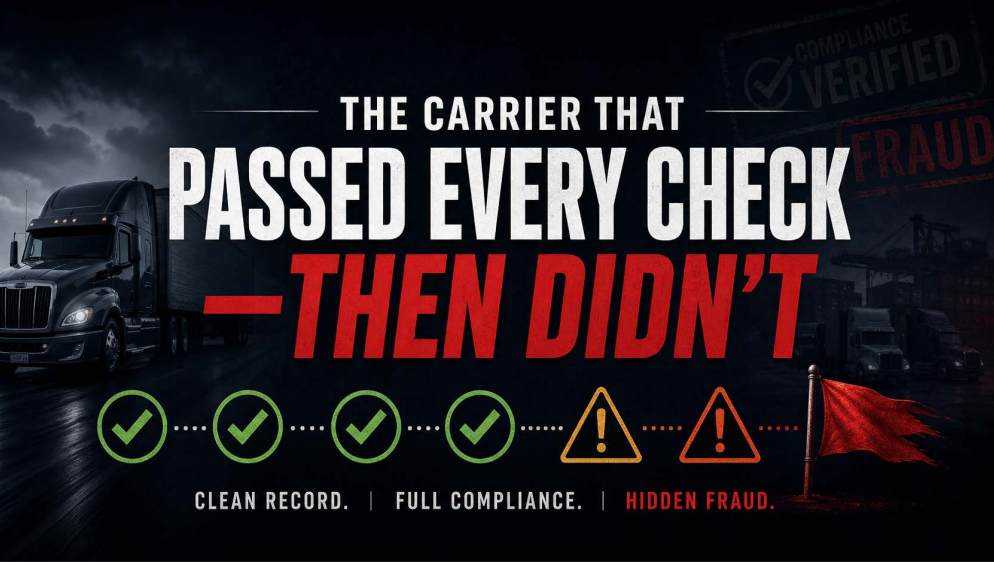
A trusted carrier had hauled the same commodity for the same shipper dozens of times: flour, clean history. Then, mid-transit, they handed the load to a second carrier without authorization – one with no relationship to the shipper and no reason to keep that trailer dedicated to a single food-grade product. Combining it with other freight to fill out the run costs the second carrier nothing. Whether that happened is exactly the problem: the shipper has no way to confirm what else that trailer carried, or whether the full load even arrived. The original carrier closed it out as routine.
It wasn’t a minor loss. It was an unverified party handling a food-grade shipment, and there is no way to reconstruct who touched it.
This is what a sold MC looks like from the outside: every credential still checks out. The MC# is active, insurance is current, compliance history is clean – because none of that changed. What changed is who’s actually operating behind it. Onboarding-stage vetting can’t catch this, because the carrier already passed onboarding, sometimes years ago. By the time a compromised load surfaces, it’s rarely the first one.
The one signal that’s cheap to check and hard to fake is capacity math. A 10-truck long-haul fleet, run at reasonable utilization, moves roughly 18–22 loads a week – the ceiling is set by transit time, HOS limits, and dwell. A 10-truck local fleet running short turns can move 50–180. When a carrier is consistently moving 2–3x what its stated fleet size and operating model can realistically support, one of four things is happening: misrepresented fleet size, quiet re-brokering, unauthorized consolidation, or sub-carriers running off the books. None of the four stay clean.
Two more signals worth a standing check: a carrier drifting outside its known corridor (one that’s run FL–IL for years doesn’t suddenly book WA loads without a reason), and infrastructure overlap – the same IP, domain, or phone number showing up under more than one carrier identity. The second rarely happens by accident.
One layer worth adding at the equipment level: a GPS tracker with a light sensor, mounted inside the trailer itself – not the cab, not a driver’s phone. Trailer doors have no reason to open between scheduled pickup and delivery. A light reading at an unscheduled stop is the signal, in real time, not after the fact. That data point shouldn’t stand alone either – a driver-controlled tracking app is exactly the kind of source a compromised operator can fake.
The behavioral signals above don’t need new tooling – just re-checking carriers that have already earned trust, on a schedule, instead of treating a clean history as permanent clearance. FMCSA’s Motus rollout helps at the registration layer for new entrants – it does nothing for the carrier base that’s already inside the trust loop. Until that catches up, behavioral pattern review, backed by data the carrier doesn’t control, is the only defense that reaches carriers already flying clean.